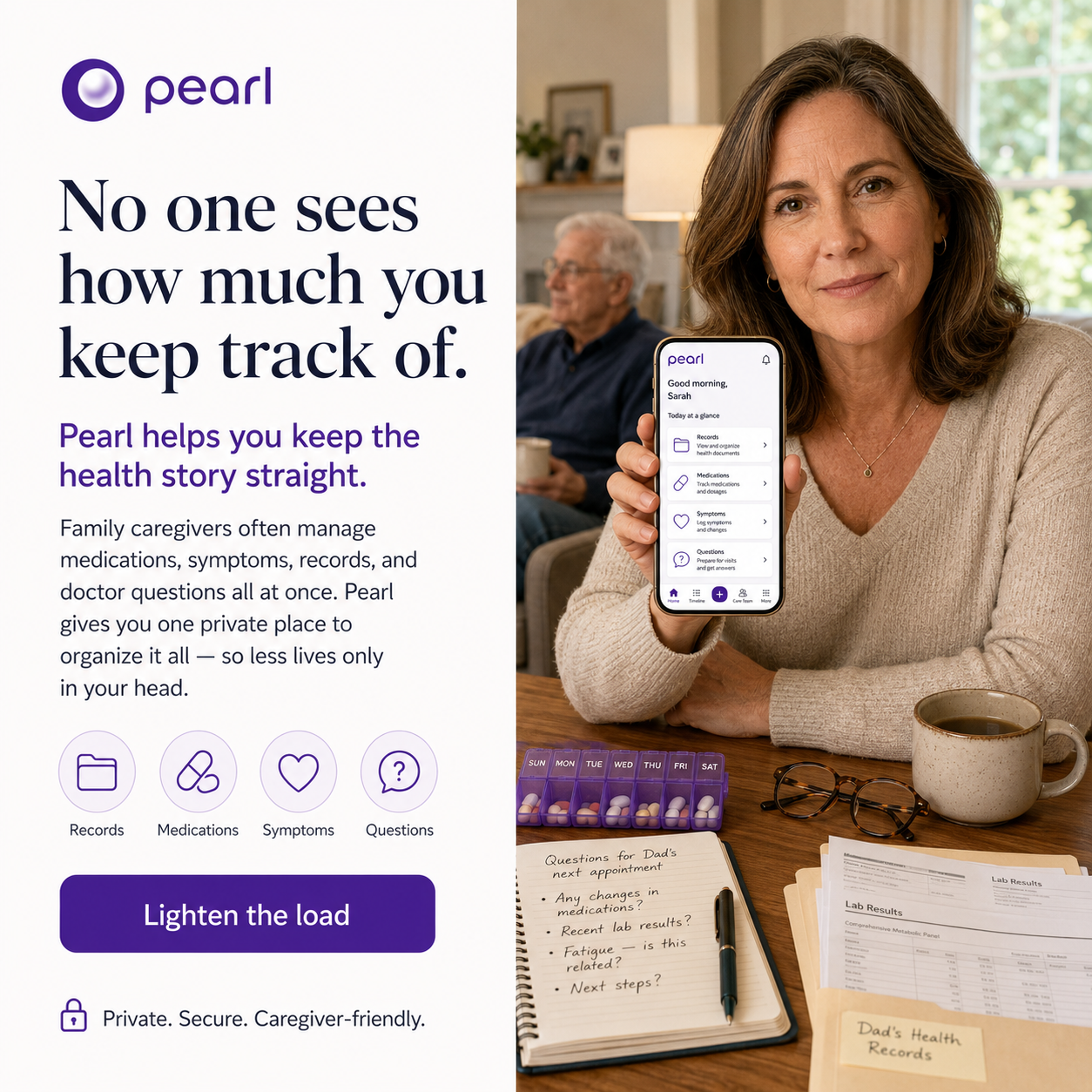


Why Pearl Exists
“I set out to find answers to a myriad of symptoms and a long list of suspects. AI helped me organize the questions, the history, and the patterns until the right conversations could finally happen. I built Pearl to use on my journey. And now you can try it for yourself.”
The fight didn’t start with my own health.
As a parent, I spent years advocating for my children to get the right mental healthcare — not a quick label, not the diagnosis of the moment, but the care they actually needed. ADHD is real. But it is not what every child has. Getting that distinction required persistence, preparation, and knowing which questions to ask — often better than the system itself.
I was doing this long before I ever had to do it for myself.
When It Became Personal
When my own health began to fall apart, I recognized the pattern immediately:
• Something was clearly wrong
• The system wasn’t built to hear it
• The only way through was to show up prepared — and keep pushing
So I did what I knew how to do.
I set out to find answers to a myriad of symptoms and a long list of suspects. I used AI to systematically piece together symptoms, timelines, and patterns — iterating, refining, validating — until the right questions surfaced and the right conversations with clinicians could finally happen.
That experience didn’t just give me answers.
It exposed a gap.
And that gap became Pearl.
Built by Someone Who Understands the System — Technically
Pearl wasn’t built by accident, and it wasn’t built by someone guessing at how technology works in healthcare.
It was built by someone with deep, hands-on experience across the full data stack — from the browser to the backend, and all the way down to infrastructure and security.
That includes:
• Web & Application Layer
○ Designing and deploying secure, responsive web applications
○ Understanding how user input is captured, processed, and protected in real time
○ Building systems that prioritize usability and privacy simultaneously
• Data & Database Architecture
○ Structuring data flows so sensitive information is minimized, compartmentalized, or never stored at all
○ Working with relational and distributed databases
○ Designing systems where local-first and encrypted data models reduce exposure risk
• Infrastructure & Data Center Operations
○ Experience with server environments, networking, and cloud architecture
○ Understanding how data moves across systems — and where it becomes vulnerable
○ Designing for resilience, redundancy, and controlled access
• Security & Privacy Engineering
○ Implementing encryption strategies (including AES-256 and secure transport layers)
○ Managing identity boundaries — ensuring users are not directly tied to their most sensitive data
○ Thinking in terms of attack surfaces, threat models, and failure modes — not just features
This isn’t theoretical knowledge.
It’s practical experience with how data is actually handled, exposed, protected — or mishandled — inside real systems.
Why That Matters
Most “free” tools rely on centralizing your data.
Pearl was built with a different philosophy:
• Minimize what is collected
• Strip identifying information wherever possible
• Keep sensitive data local when it can be
• Create distance between identity and health questions
Not because it sounds good — but because that’s what the architecture allows.
And because someone who understands data systems knows how easily things can go wrong.
Not Just a Patient Problem
Through all of this, another truth became clear:
This isn’t just hard for patients.
Friends of mine who became doctors have shared the other side:
• 10–15 minute appointments
• Incomplete or unclear patient histories
• Constant pressure to move faster than understanding allows
The system isn’t failing one side.
It’s failing both.
What Pearl Is Trying to Do
Pearl exists to bridge that gap.
To help patients:
• Organize their thoughts
• Surface the right details
• Ask better questions
So that clinicians can:
• Understand faster
• Think deeper
• Act sooner
The Goal
The goal is simple:
Help people show up prepared, informed, and confident — so the conversation that matters can actually happen.
Support Patient Empowerment
Pearl isn’t just a product.
It’s a response to a system that needs help — built by someone who has lived the problem, and understands the technology deeply enough to do something about it.
Support patient empowerment!
Tips welcome!

